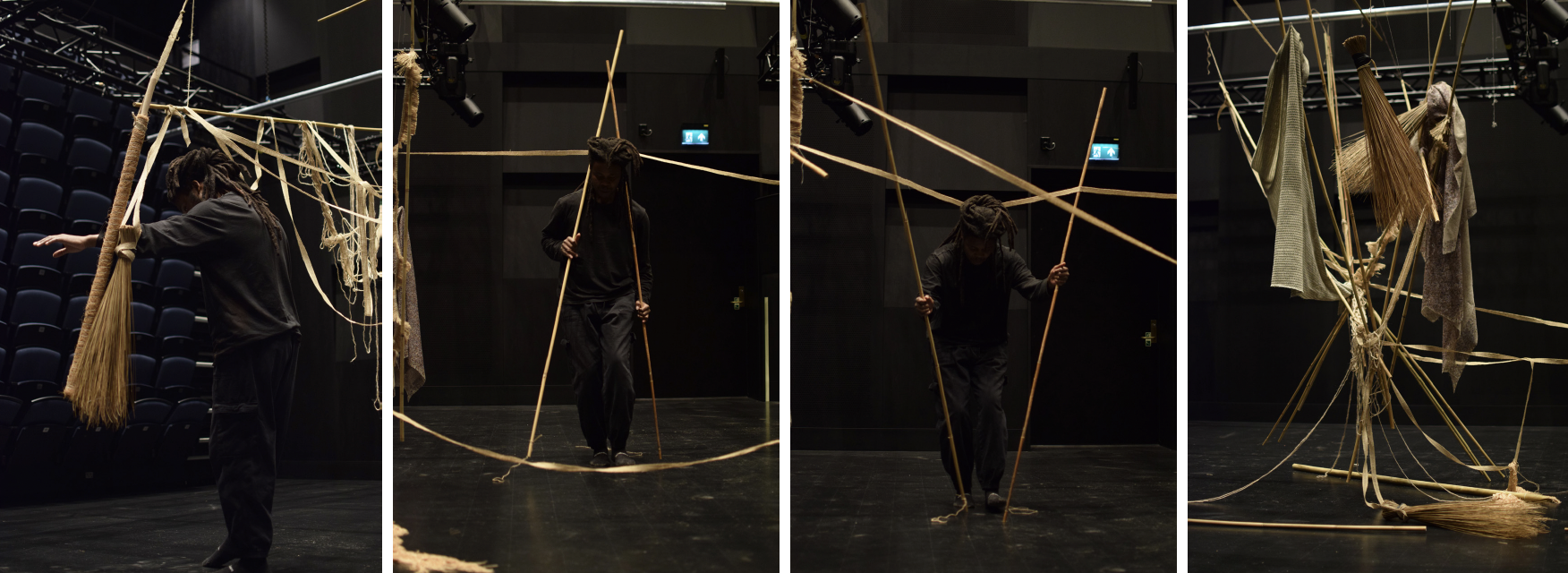
Moving through topos and materiality/ a sensory workshop
Creative team: Tendai Malvine Makurumbandi (choreographer),
Peny Spanou (costume design and scenography),
Mcintosh Jerahuni (performer)
Year 2026
A body enters space, and the space starts moving.
This project presents a workshop with Tendai Makurumbandi in the black box of Normoria, which is considered as one of the entry points to our sensory research while also returning and reflecting to our previous collaborations.
I was invited to revisit my work with Tendai Makurumbandi as an entire journey, in order to shape a new methodology of co-creating, recognising the different starting points into each project. From Displaced Shadows, where the work begins from materiality, form and costume as ephemeral space, to My Song, where the work is created through workshops and the study of the Zimbabwean house, roots and memory, and biological processes. Revisiting the journey as a whole allowed me to reflect on the core principles of my artistic practice and my understanding of the inseparable relation between body and space, where the body is never stable, it is constantly transformed and redefined and space is an active performer.
Through material, the invisible, memory, identity, otherness, becomes tangible, allowing the body to experience it physically.
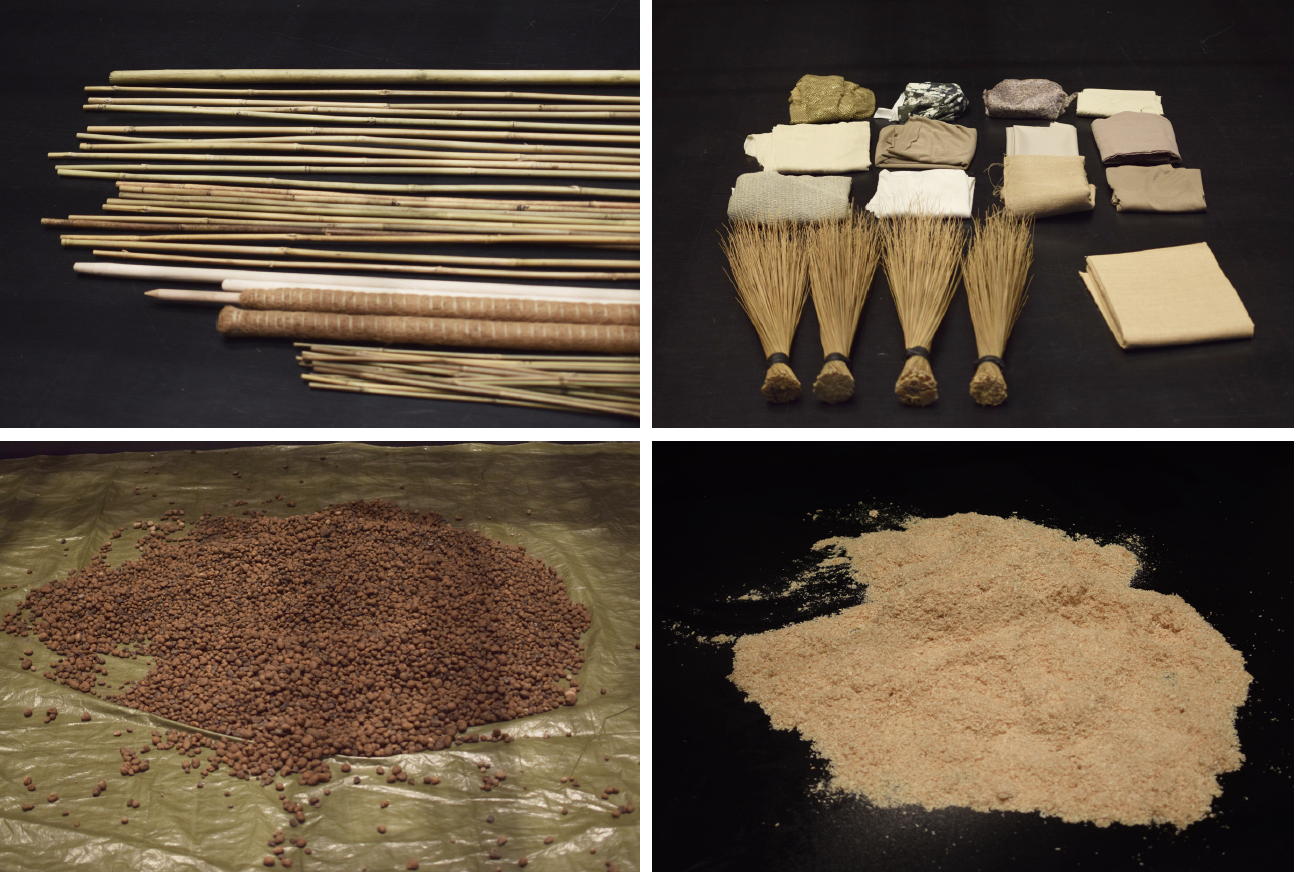
The workshop focused on materiality, setting aside any predefined idea or concept. What I proposed as a loose structure was a process of searching for a variety of materials together, bringing them into the space, and exploring them during a series of timed sessions, engaging our entire bodies.
A soundscape: Instead of using words, I choose to use visual marks to point to the sounds emerging from the material interactions, as a way of allowing them to remain open and sensed.
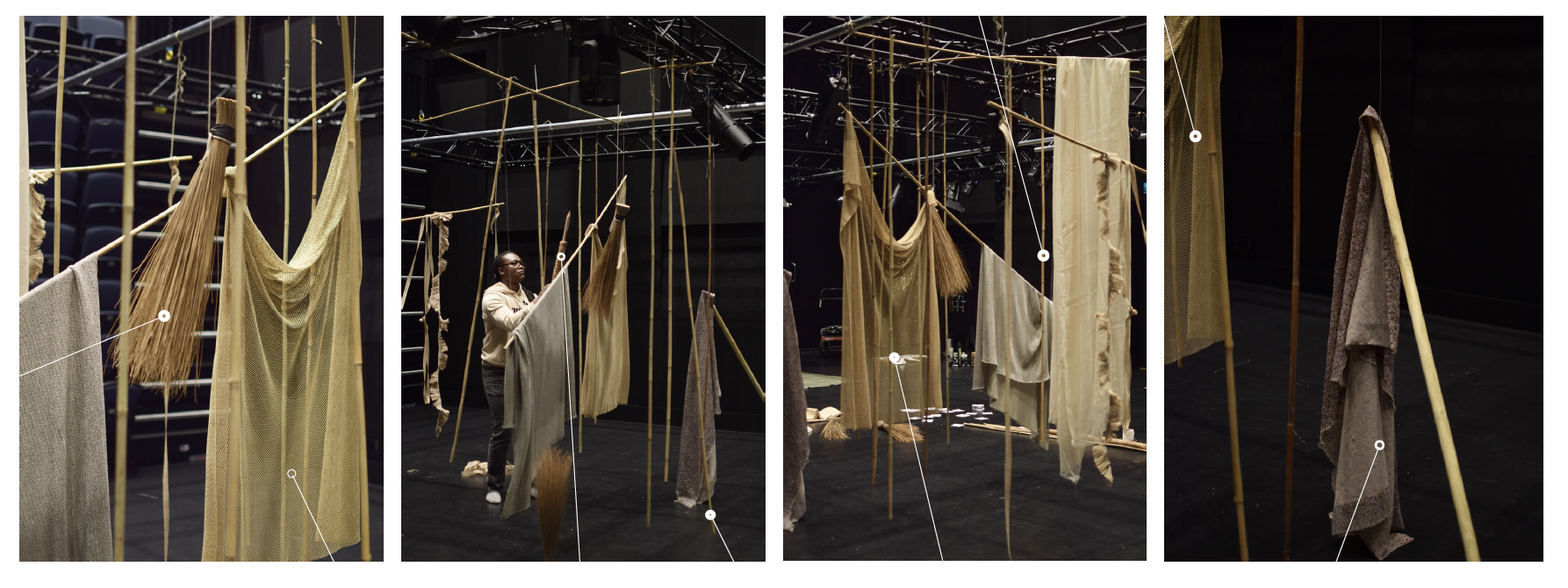
The day in the room started by sharing a set of words forming an early sensory vocabulary, providing a shared tool that connects language with material experience. These words were read aloud before the interaction with the materials. We then divided the materials into zones of exploration, where, with closed eyes, we engaged with them through touch, sound, temperature, weight and resistance. Through this process, materials shifted from passive objects to active agents. They became familiar in an embodied way; our hands formed a tactile memory, allowing new modes of interaction to emerge.
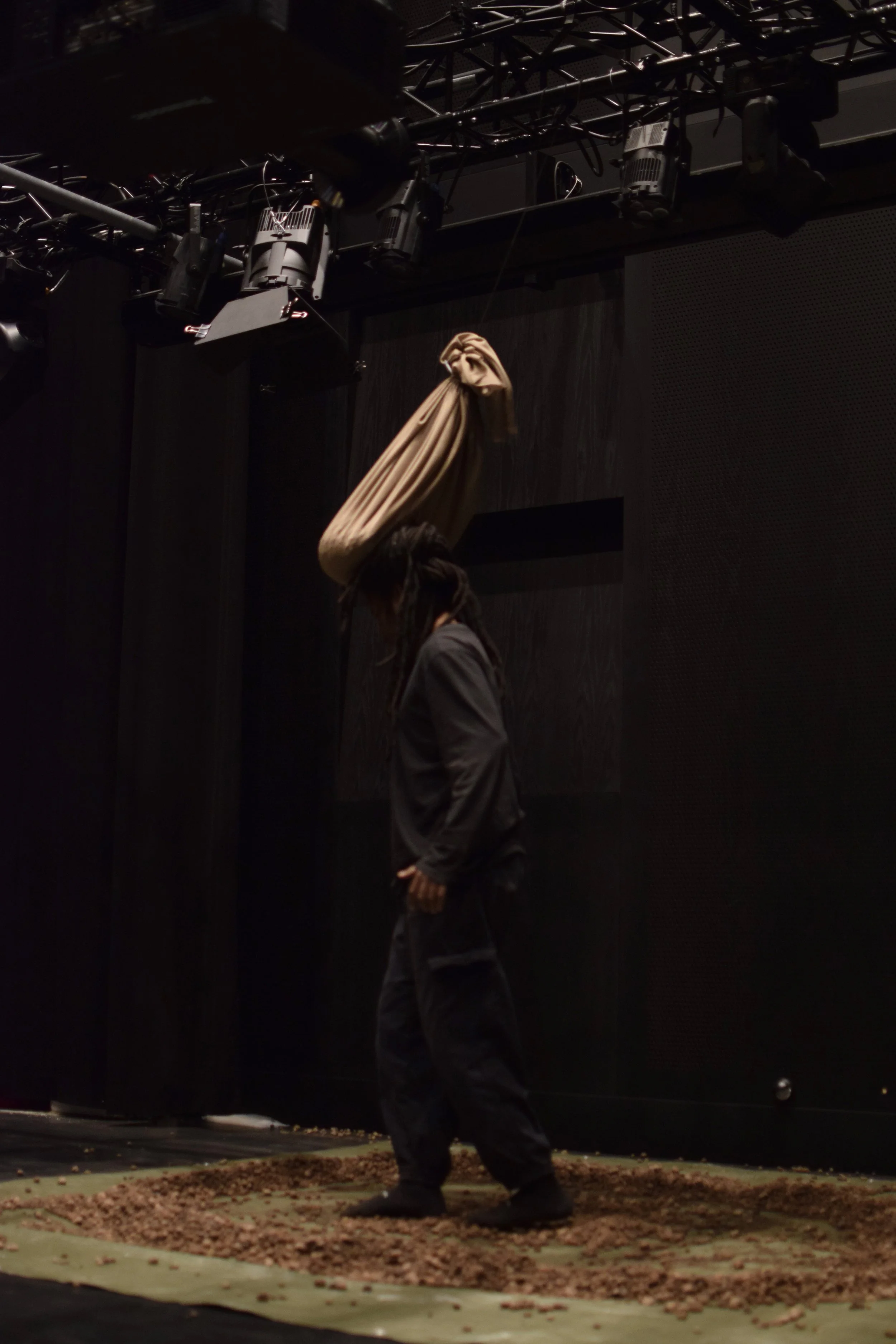
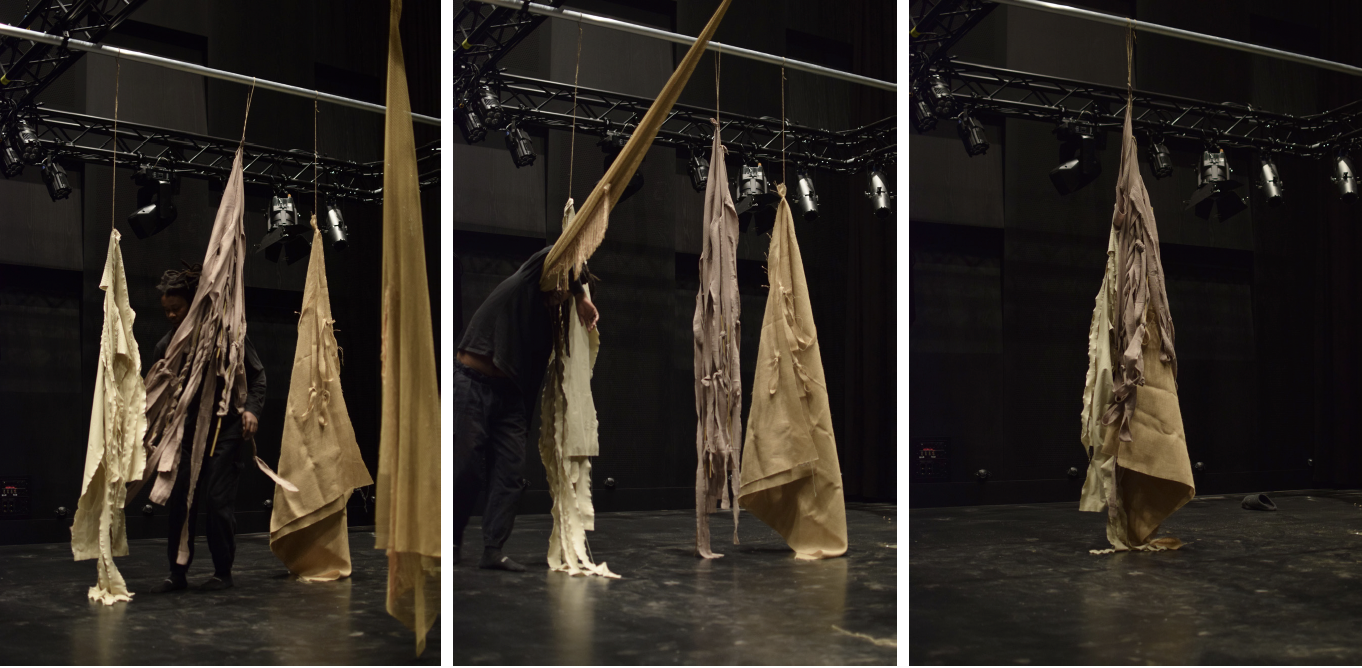
Guided by materials, we had a series of sessions in which I created spatial areas of exploration. These were activated through movement, the body acting on material while material acted on the body.
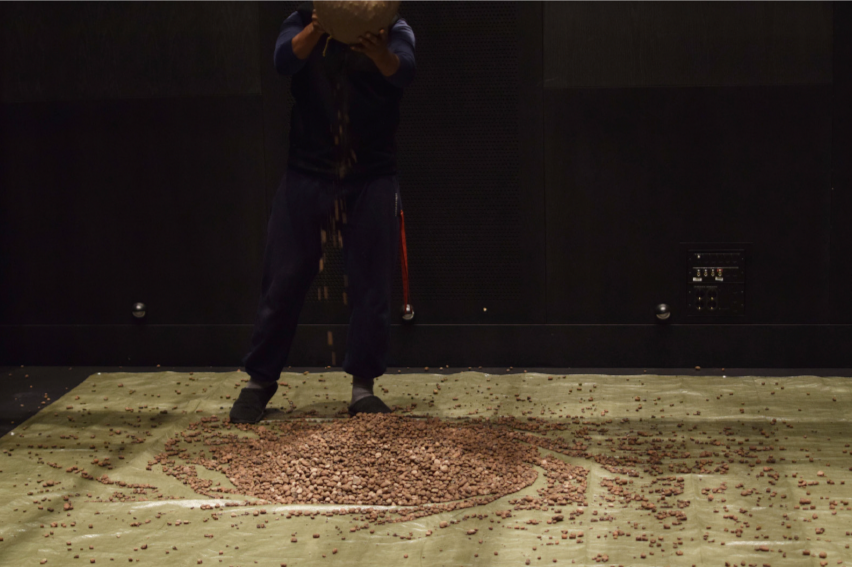
area of exploration 01
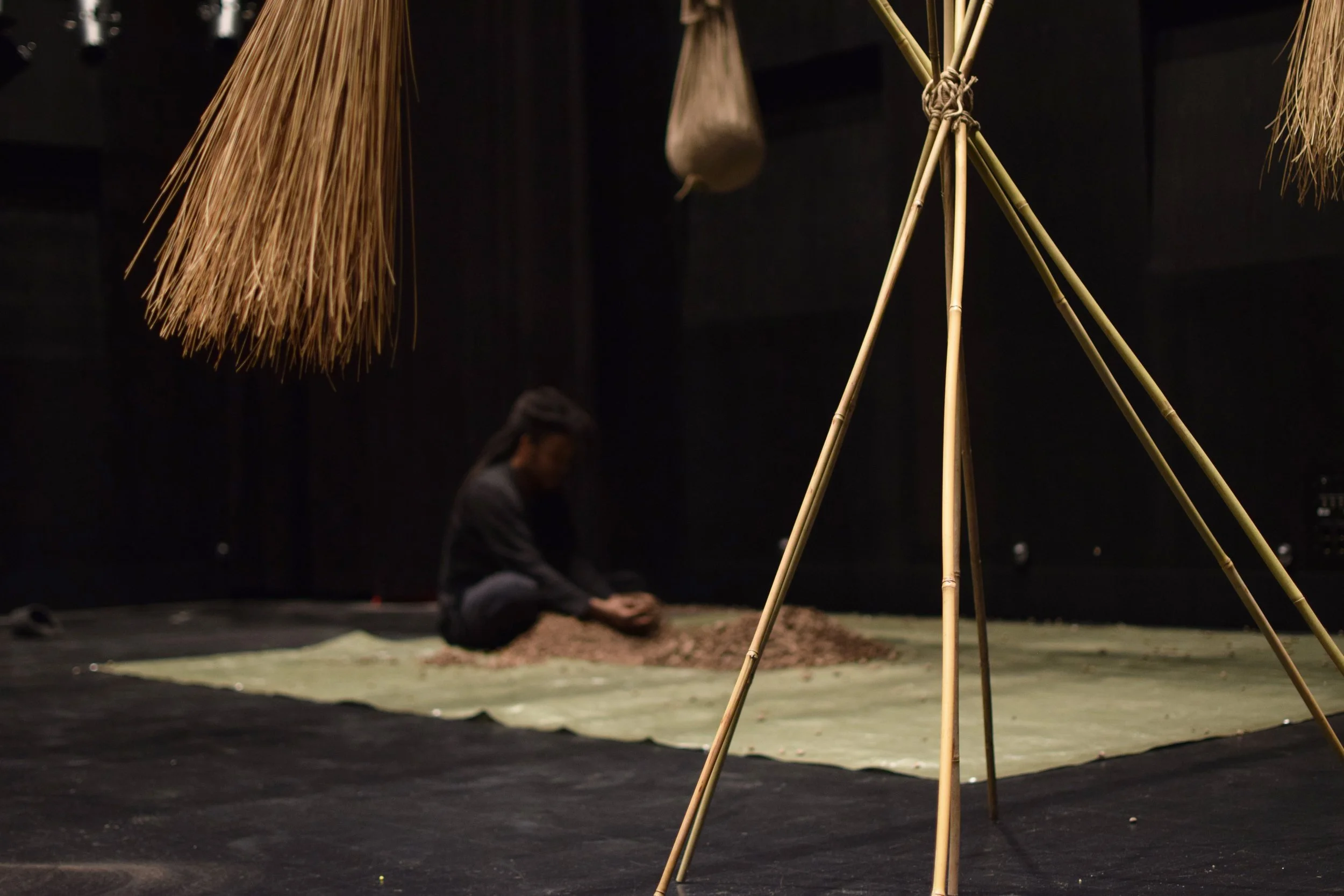
As a participant-observer, I often chose to return to a closed-eye practice when associative thinking intensified. In parallel, I developed various modes of documentation, such as capturing the space transformation through photography, writing fragments, sketching body scores, and identifying the sounds produced by each material.
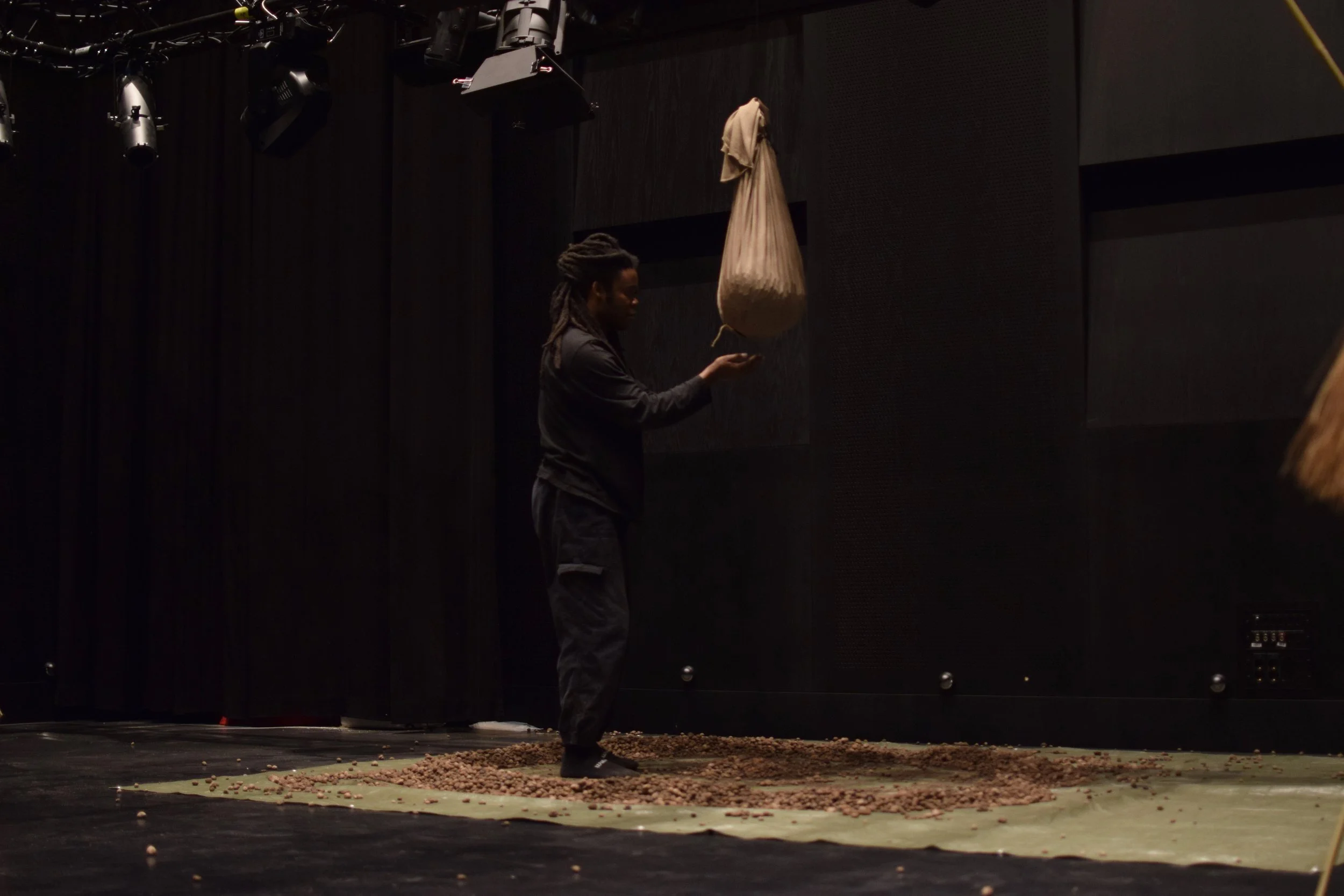
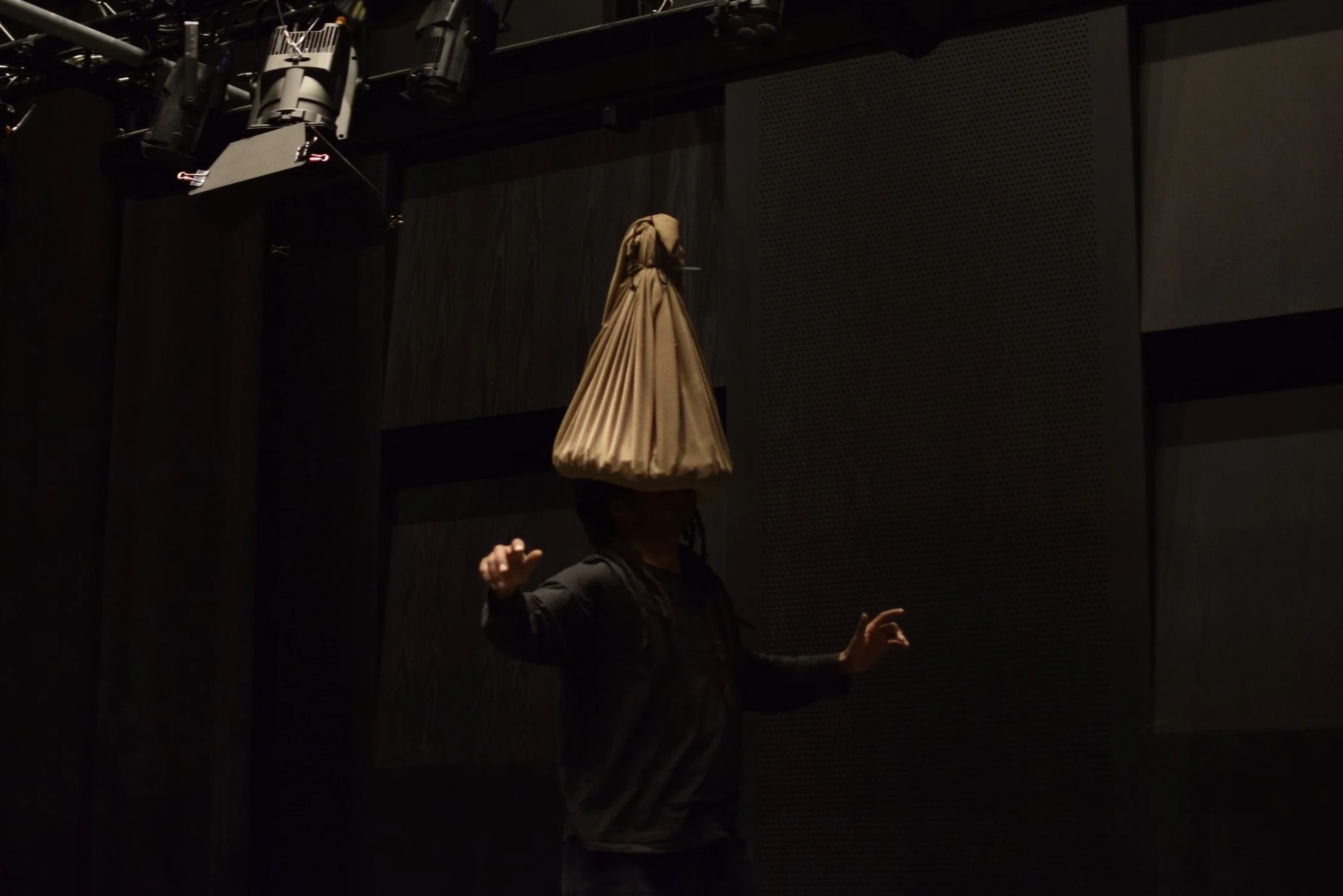
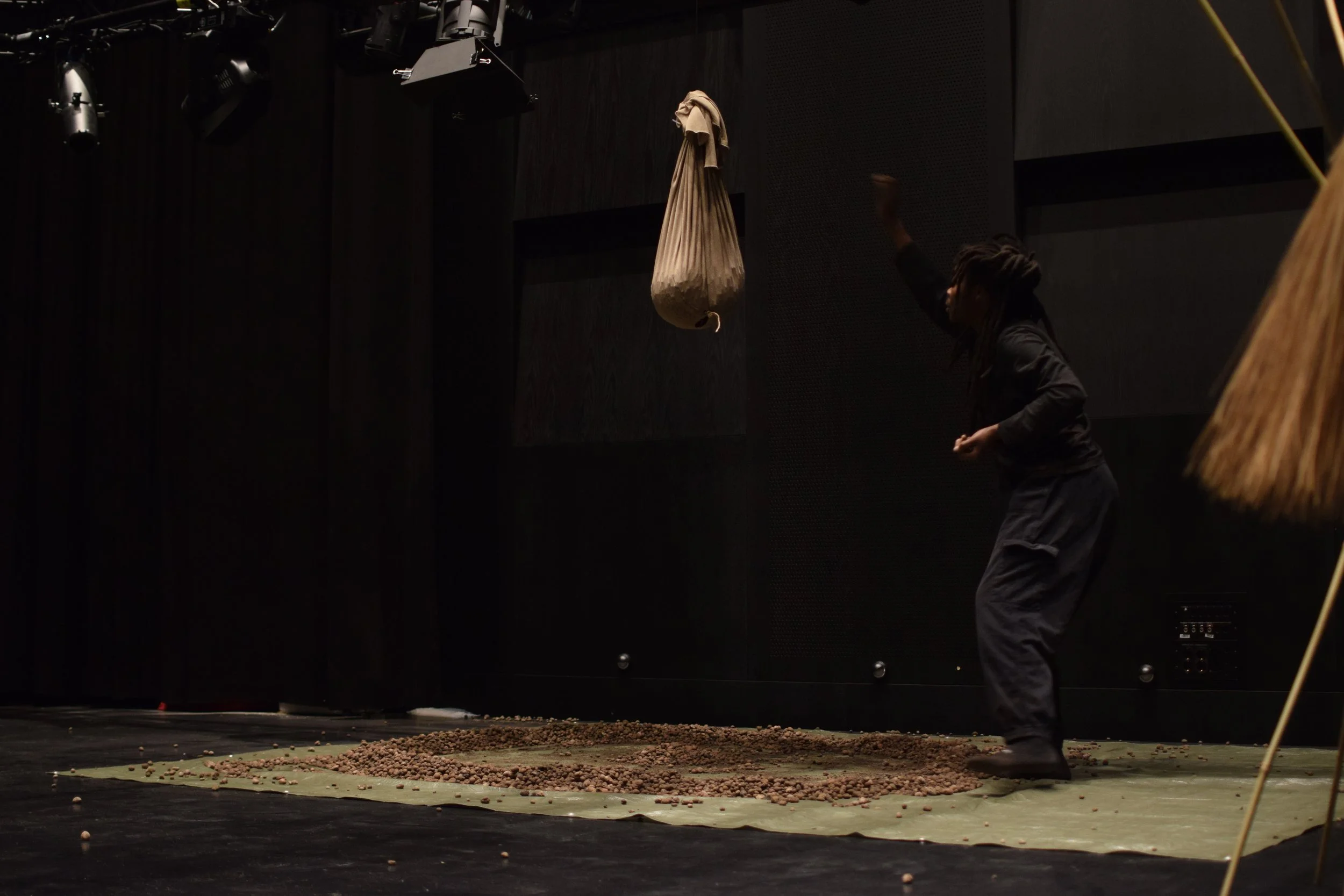
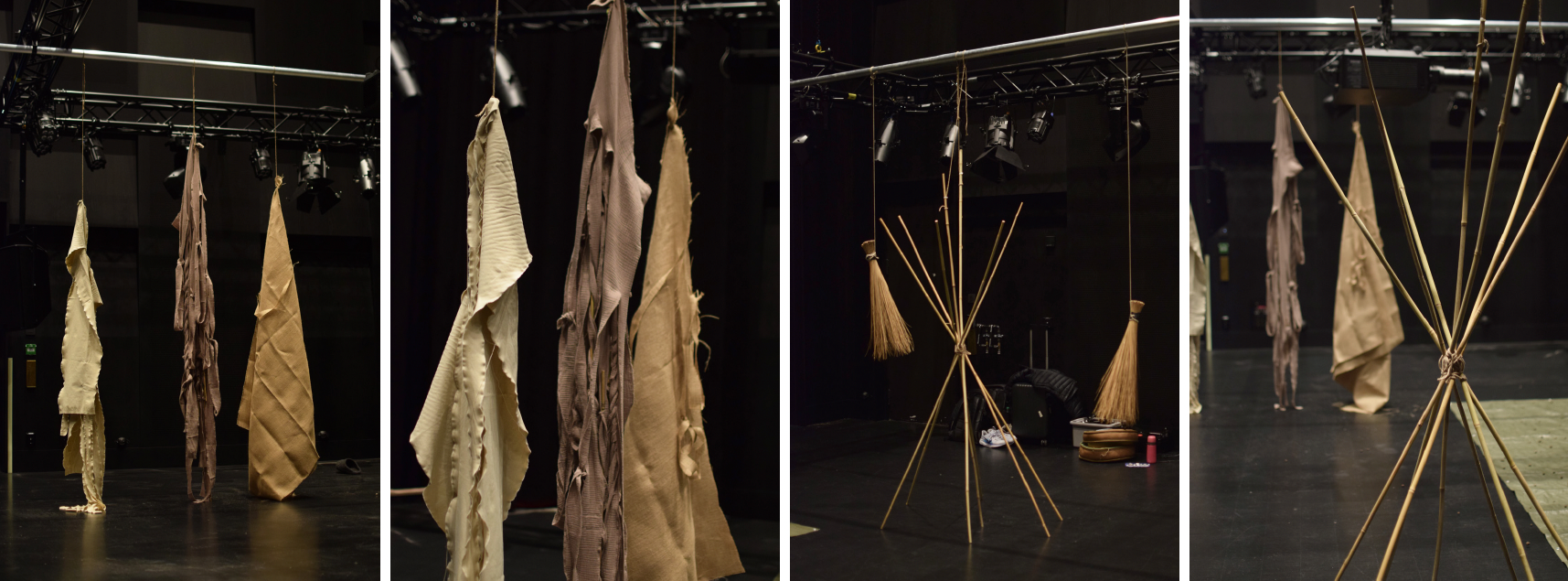
area of exploration 02
Here, documentation becomes more than a supporting tool of record; it is an integral, generative element of the process.
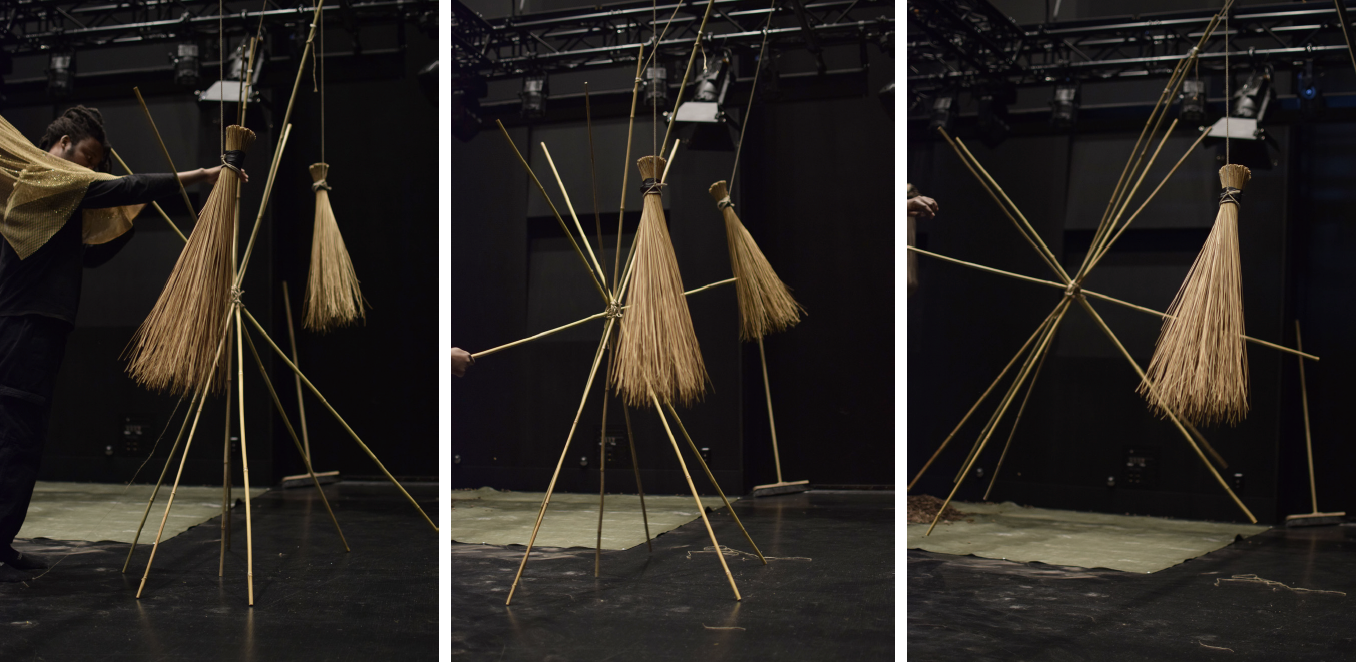
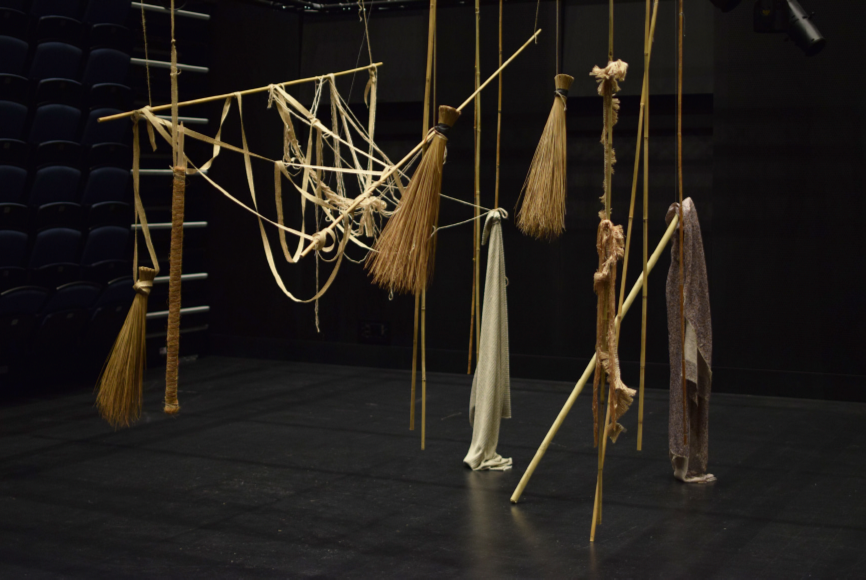
area of exploration 03
What remains is a porous practice, characterised by an increased sensitivity to the negotiations between body and materials, an attentiveness to moments where a shift in weight, a change in temperature, or the faintest sound can redirect the movement. Costume and space are articulated before, during and after a performance, positioning them as active participants in the co-creation of experience.